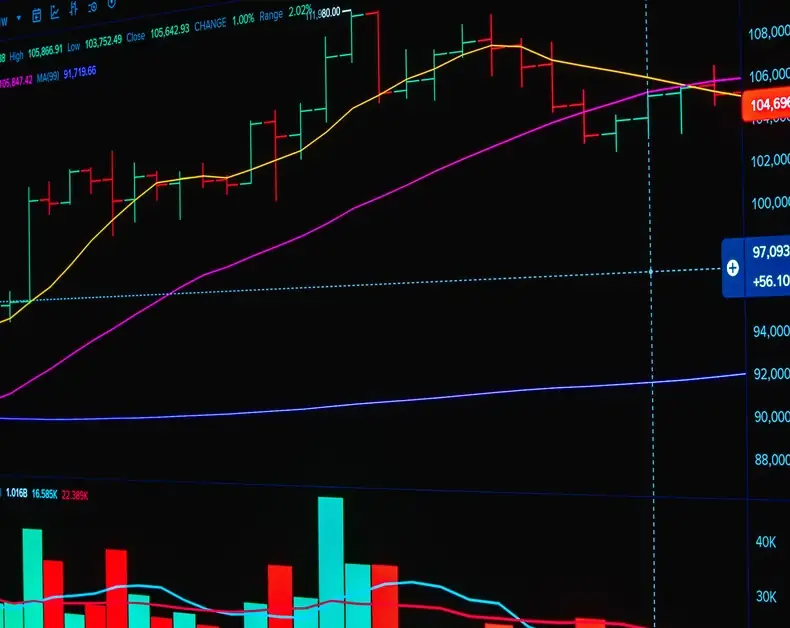
Stock Market News are attracting significant attention in today’s market. Stock market news takes centre stage this Friday as U.S. stock futures see a boost, thanks to a decrease in oil prices and a retreat in Treasury yields. This development offers a respite for Wall Street after a week marked by financial turbulence. While S&P 500, Nasdaq-100, and Dow futures have all shown gains, the overall market sentiment remains cautious. Observers are keenly watching how these changes will influence the broader economic landscape. Meanwhile, small cap stocks remains a key focus for market participants.
Friday Morning stock market news Update
In the latest stock market news, U.S. stock futures saw an uptick on Friday morning. The S&P 500 futures went up by 0.25%, while Nasdaq-100 futures increased by 0.52%. Dow futures also rose, adding about 99 points or 0.19%. Despite this positive start, the Dow Jones Industrial Average is likely to end its fourth consecutive week in negative territory, having dropped around 0.6% as of Thursday. On the other hand, the S&P 500 and Nasdaq are on track to close the week with gains of 0.7% and 1.6%, respectively.
Stock Market News: Oil Prices and Market News Influence
Brent crude futures dropped to about $99 a barrel. This decrease followed reports of discussions in New York between American and Iranian representatives aiming to reopen the Strait of Hormuz. This development has had a notable impact on the market news and bond movements for the week. For more details, you can read the latest updates from The Wall Street Journal.
Treasury Yields: A Key Focus
The bond market, which has been unsettling equities throughout the week, showed some signs of stabilisation. The 10-year Treasury yield fell to around 5.167% on Friday. This followed a peak of 5.225% on Thursday, marking the highest level since 2007. The 30-year yield also reached 5.502% on Thursday. Despite Friday’s retreat, the 10-year yield is set to end the week 16 basis points higher, staying close to its highest levels in nearly two decades, as reported by CNBC.
Implications of Treasury Yields on Borrowing Costs
Higher yields have led to increased borrowing costs for consumers. The 30-year fixed-rate mortgage has now reached 7.45%, a figure not seen since 2024. Heather Berger, an economist at Morgan Stanley, has expressed concern that rising rates may affect consumer spending. She noted that after declines from mid-2024 to early 2026 in credit card and auto loan rates, recent trends have stalled, and mortgage rates have picked up again.
Consumer Sentiment and Economic Indicators
Readers are also observing Friday’s University of Michigan consumer sentiment index and durable goods data closely. These indicators could provide additional insights into economic conditions and consumer behaviour, crucial for those tracking stock watchlists and earnings reports. The small cap stocks market is responding.
In today’s market news, US stock futures show an upward trend as a drop in oil prices and retreating Treasury yields create a favourable environment. People keeping a stock watchlist will notice the distinction between small cap stocks and their large cap counterparts, which often react differently to such economic shifts. Small caps, typically representing newer or smaller companies, can be more volatile but also offer different growth potential compared to the more established large caps.
The drop in oil prices brings a ripple effect across financial markets, impacting various sectors differently. Meanwhile, changes in Treasury yields continue to play a significant role in consumer borrowing, influencing everything from mortgage rates to car loans.
Overall, the interplay of these factors paints a complex picture for the market, with shifts in oil prices and Treasury yields contributing to current trends. As earnings reports trickle in, they will provide further insights into how companies are navigating these economic conditions. Keep an eye on these elements for a better understanding of the broader financial landscape.
Why did U.S. stock futures rise on Friday morning?
U.S. stock futures increased due to a combination of easing oil prices and a retreat in Treasury yields from recent highs. This provided some relief to Wall Street after a week of volatility. For more information, visit The Wall Street Journal.
What impact did oil prices have on the market?
Brent crude futures fell to about $99 a barrel amid reports of U.S. and Iranian negotiators possibly reopening the Strait of Hormuz. This decline in oil prices significantly influenced bond market movements and, by extension, the stock market. Read more at The Wall Street Journal.
How did Treasury yields change throughout the week?
The 10-year Treasury yield fell to around 5.167% on Friday after peaking at 5.225% on Thursday, which was the highest level since 2007. Despite Friday’s decrease, the 10-year yield is set to end the week up 16 basis points. More details are available at CNBC.
What are the implications of rising Treasury yields on borrowing costs?
Higher Treasury yields have led to increased borrowing costs for consumers, with the 30-year fixed-rate mortgage reaching 7.45%, a level not seen since 2024. Rising rates could potentially impact consumer spending, according to economists. For further insights, see CNBC.
What economic reports are traders watching at the end of the week?
Traders are closely monitoring the University of Michigan consumer sentiment reading and durable goods figures. These reports are essential in understanding economic conditions and consumer behaviour. For more updates, check The Wall Street Journal.
In other news: Stocks To Watch: Oracle Faces AI Challenges