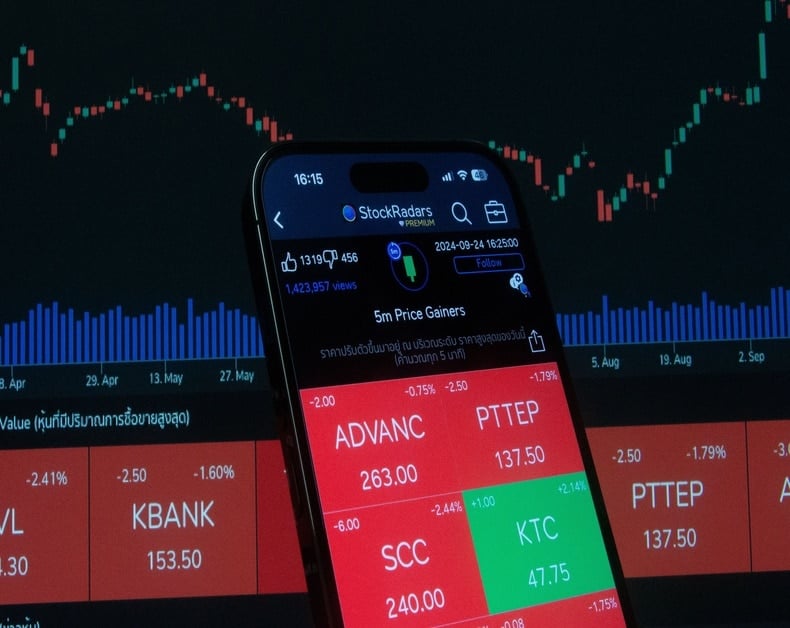
Tech Stocks are attracting significant attention in today’s market. Tech stocks have been capturing attention as the sector demonstrates remarkable resilience amid global energy and supply chain challenges. The ongoing fluctuations in oil prices, coupled with geopolitical tensions, have not deterred the tech industry from maintaining its growth trajectory. Major players like Nvidia and Alphabet have shown impressive performance, highlighting the sector’s robustness. As the world navigates economic uncertainties, the tech sector’s adaptability continues to play a pivotal role in its ongoing success. Meanwhile, small cap stocks remains a key focus for market participants.
Market Highs Amid Middle Eastern Tensions
The AI sector has recently pushed the market to unprecedented peaks, despite ongoing issues in the Middle East. While fears of supply disruptions for resources like natural gas and helium remain, these concerns haven’t significantly impacted chip manufacturers or hyperscalers.
Since 30 March, the iShares Semiconductor ETF (SOXX) has seen a more than 30% increase. Additionally, major companies often referred to as the “Magnificent Seven”—including Nvidia, Amazon, Alphabet, Meta, and Tesla—have all experienced double-digit percentage growth. The iShares Expanded Tech-Software Sector ETF (IGV) has also shown an upward trend.
Oil Prices and tech stocks
Oil prices have been unpredictable since the conflict began, yet the tech sector’s high margins provide a buffer against rising commodity costs associated with chip and server production for data centres. This resilience extends to Asian economies dependent on Middle Eastern energy imports.
Chetan Ahya, Morgan Stanley’s chief Asia economist, remarked earlier this week that companies requiring helium and sulfur are managing to cover these costs. Ahya highlighted that Korea and Taiwan are profiting significantly from the tech sector, enabling them to handle increased expenses for gas, sulfur, and helium without disrupting their production lines.
Regional Resilience and Supply Chains
This week, Taiwan Semiconductor (TSM) indicated during an earnings call that short-term operational disruptions were unlikely due to a robust materials supply chain. CFO Wendell Huang stated that the company sources specialty chemicals and gases, such as helium and hydrogen, from various suppliers globally while maintaining a safety stock inventory. Huang also noted collaboration with Taipower and the Taiwanese government to ensure a stable energy supply.
Long-term Energy Agreements and tech stocks
Wall Street has focused on the hyperscalers’ efforts to secure energy supplies through long-term renewable energy purchase agreements lasting 10 to 20 years. These agreements aim to mitigate rising costs. According to Morgan Stanley researchers, the increasing demand for energy may accelerate the development of low-cost energy sources and technologies, including carbon capture, energy storage, nuclear power, and grid optimisation.
Impact on Global Markets
On Friday, stocks reached a third consecutive all-time high following Iran’s announcement that the Strait of Hormuz would remain “completely open” during the Israel-Lebanon ceasefire. This news led to a significant drop in oil prices, with Brent and West Texas Intermediate futures falling below $90 per barrel. For more details, you can access an in-depth analysis of the latest stock market news and events. The small cap stocks market is responding.
As we wrap up the latest developments in the tech sector, it’s clear that resilience in energy and supply chain dynamics has played a pivotal role in its current ascent. The importance of small cap stocks today cannot be overstated, as they continue to provide opportunities for those keeping a close eye on market news. The recent global events have notably influenced these small cap stocks, with shifts echoing throughout the financial landscape.
Market volatility remains a factor to consider, impacting not only the tech giants but also the smaller entities within the sector. For those compiling a stock watchlist, attention to detail in earnings reports and the performance of chip manufacturers can offer valuable insights into the sector’s trajectory.
In conclusion, the tech sector’s resilience is reflected in its capacity to adapt to challenges and leverage opportunities arising from ongoing global shifts. Staying informed and understanding these dynamics is essential for anyone interested in the market’s ebb and flow.
Stay Ahead — Get free small-cap alerts delivered to your inbox
Join readers who receive daily alerts from our newsletter.
How have recent Middle Eastern tensions affected the tech sector?
Despite ongoing tensions in the Middle East, the tech sector has reached unprecedented market highs, largely driven by the AI trade. Concerns over supply disruptions for resources such as natural gas and helium have not significantly impacted chip manufacturers or hyperscalers, allowing for stability in the sector. More details can be found in this source.
Why has the iShares Semiconductor ETF (SOXX) surged recently?
Since 30 March, the iShares Semiconductor ETF (SOXX) has surged more than 30%, buoyed by strong performance in the tech sector despite geopolitical uncertainties. This rise highlights the resilience and growth potential of chip manufacturers in the current market climate. For further context, see this article.
What role do high margins play in the tech sector’s resilience?
The tech sector’s high margins provide a financial buffer against increased commodity costs, particularly in chip and server production for data centres. This financial strength allows tech companies to absorb fluctuations in oil prices without significant disruption, maintaining stability in Asian economies reliant on Middle Eastern energy imports. More information is available in this analysis.
How are tech companies addressing potential supply chain disruptions?
Tech companies like Taiwan Semiconductor (TSM) are mitigating potential supply chain disruptions by sourcing specialty chemicals and gases from multiple suppliers across different regions. This strategy, along with maintaining a safety stock inventory, ensures that short-term operational impacts remain minimal. For a detailed discussion, refer to this source.
What steps are hyperscalers taking to secure energy supplies?
Hyperscalers are actively securing their energy supplies through long-term power purchase agreements for renewable energy, locking in electricity prices for the next 10 to 20 years. This approach helps insulate them from rising energy costs and supports the development of low-cost energy technologies. Further insights can be found in this report.